All information about the Apple Card has been collected independently by CardCritics™
Apple Card Review: Built for Apple Loyalists
-
 Written by
Harrison Pierce
Written by
Harrison Pierce
-
 Edited by
Jasmin Baron, CCC™
Edited by
Jasmin Baron, CCC™
As a digital nomad and credit card rewards writer, I’m constantly discussing the best rewards credit cards and how to maximize travel purchases. However, I’m an Apple loyalist through and through, so I recommend the Apple Card to almost everyone who’s an Apple aficionado.
It’s one of the most underrated cards in my wallet — I’ll explain why in our Apple Card review.

400+ Credit Cards
Analyzed independently across 50+ data points in 30+ product categories

Reviewed
By a team of credit card experts with an average of 9+ years of experience

Trusted by
More than one million monthly readers seeking unbiased credit card guidance
CardCritics™ editorial team is dedicated to providing unbiased credit card reviews, advice and comprehensive comparisons. Our team of credit card experts uses rigorous data-driven methodologies to evaluate every card feature, fee structure and rewards program. In most instances, our experts are longtime members or holders of the very programs and cards they review, so they have firsthand experience maximizing them. We maintain complete editorial independence — our ratings and recommendations are never influenced by advertiser relationships or affiliate partnerships. You can learn more about our editorial standards, transparent review process and how we make money to understand how we help you make informed financial decisions.

Purchase and Balance Transfer APR
17.49% – 27.74% Variable APR

Recommended Credit Score
Good – Excellent
670 – 850
Balance Transfer Fee
None

Intro Bonus
N/A
Annual Fee
$0

Rewards
3% back with Apple and select merchants like Nike, Exxon Mobil, Walgreens, and more when you use Apple Card with Apple Pay.
2% back when you use Apple Pay
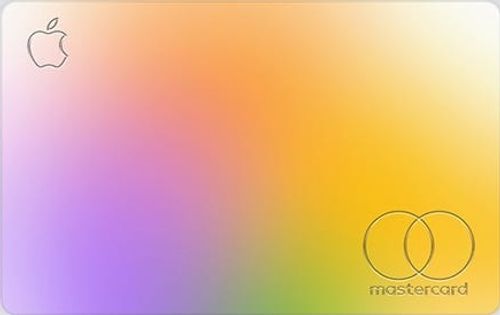
1% back when you use the titanium card in stores or your virtual card number online.
CardCritics™ Opinion
The Apple Card comes packed with benefits and doesn’t charge an annual fee. Cardholders can enjoy Apple Card Monthly Installments with 0% interest on select Apple products, up to 3% Daily Cash back, and all the built-in security benefits Apple is known for. If you are an Apple user, it can make a lot of sense to incorporate a lucrative cash-back credit card like this one into your overall points-and-miles strategy.
Our Critical Analysis:
Apple Card
- No annual or other fees
- Interest-free financing on select Apple products
- Up to 3% Daily Cash back
- User-friendly interface
PROS
- No ability to maximize earnings
- Must be an Apple user
- Doesn’t offer Apple statement credits or a welcome bonus
CONS
Apple Card Benefits
Apple Card Monthly Installments
One of the card’s most valuable perks is Apple Card Monthly Installments. As Apple loyalists know, Apple releases new iPhones, MacBooks, iPads, Apple Watches and other technology every single year. My strategy is to upgrade to a new device periodically so that my “old” items remain valuable. I can either sell them or utilize Apple Trade In to offset the cost of a new device.
What makes Apple Card Monthly Installments so helpful is the ability to pay 0% interest on virtually any product sold by Apple (even $50 phone cases) while also receiving your Daily Cash back up front. The length of the interest-free period depends on the product:
- iPhone: 24 months
- iPad, Apple Watch, Apple Vision Pro, Mac, and displays: 12 months
- Apple TV, AirPods, and Beats Flex Wireless Earphones: 6 months
- Accessories: 12 months
This might not seem very meaningful, but here’s how it can help. Let’s say that I wanted to get a new work laptop. I can buy a 15-inch MacBook Air with upgraded unified memory for $1,603.93, including taxes and fees. Rather than paying that much in one go, I can pay $104.93 in taxes and fees when I place the order, and then pay $124.91 every month for 12 months. I’ll get the $48.13 in Daily Cash back once I place the order.
I could also trade in my current MacBook Air when I order my replacement. I’d get a $370 credit, which would lower my monthly bill to $94.08. I plan to upgrade my phone and laptop later this year, and my Apple Card makes it incredibly easy.
Unlimited Cash Back and Partner Benefits
The Apple Card has a unique earning structure. There’s no need for a physical credit card. If you prefer the physical card, you’ll actually earn less on your purchases.
Cardholders earn 2% cash back on all purchases made using Apple Pay. At select merchants, you’ll earn 3% cash back, but only when you use Apple Pay:
- Apple
- Booking.com
- Duane Reed
- Hertz
- Uber and Uber Eats
- Walgreens
- Ace Hardware
- ChargePoint
- Exxon Mobil
- Nike
If you use your physical card, you’ll earn just 1% cash back.
The other unique aspect of Apple’s earning structure is that you get your cash back daily, rather than once a month or only after you’ve paid off your statement balance. It never expires or loses value. It can either be automatically deposited into your Apple Cash card in the Wallet app (that can then be used like a debit card through Apple Pay) or you can open an Apple Savings account and deposit your cash back so it earns interest. You can also transfer your earnings to your bank account free of charge.
In addition to cash back, you’ll have access to exclusive benefits with Apple’s favorite partners. You’ll get 2% in Booking.com Travel Credits on eligible stays and car rentals booked with your card, a six-month free trial of Uber One, and benefits with Hertz, including at least 5% off pay-later base rates. Note that you’ll have to use Apple’s partnership links to qualify for these perks.
No Fees and a User-Friendly Design
Like virtually all Apple products, the Apple Card has a fantastic, user-friendly design. It’s also built for those who might not be as familiar with credit, offering a variety of tools to help you understand and manage your finances. It doesn’t charge any annual, over-the-limit, late or foreign transaction fees.
If you attempt to make a payment that is less than your total statement balance, Apple will let you know in real-time how much you will be charged in interest the following month, which helps you make informed decisions on your finances.
Plus, since the card lives in your Wallet app on your iPhone, you can start using it as soon as you’re approved, and all of your transactions, payments, savings and balance are in one place.
Apple Card Family
If you are a parent, you can utilize Apple Card Family to teach your children about credit and help them establish their own credit history. You can add a co-owner and up to four participants to your account. The co-owner has full access to the account, while participants aged 13 or older can spend within limits and earn cash back. Participants aged 18 or older can build their own credit history.
Note that Daily Cash earned on purchases made by co-owners or participants will get deposited into their Apple Cash account, not yours.
Apple Card Drawbacks
Only for Apple Users
This goes without saying, but you need to be an Apple user to maximize the Apple Card’s benefits. If you don’t have an iPhone or an iPad, you won’t be able to manage your card account, as everything is done in the Apple Wallet app. Plus, you would only earn 1% on purchases with the physical card. Without an iPhone or an Apple Watch with Apple Pay, there’s not much reason to have the card.
No Way To Maximize Earnings
If you’re an award traveler, you might prefer a travel credit card that earns points and miles that can be transferred to partner programs for maximum value. With the Apple Card, your earnings are cash back, and the only way to maximize them is to transfer them to Apple’s high-yield savings account (HYSA). At the time of writing, that account earns 3.50% APY, which is lower than my current HYSA, so that doesn’t make much sense, either.
No Apple Statement Credits
Apple offers AppleCare for its devices, which covers repairs for accidental damage like drops and spills, coverage against theft or loss twice per year, and priority support from Apple specialists. An AppleCare One plan covers up to three devices for $19.99 per month.
Similarly, an Apple One plan bundles all of Apple’s monthly subscriptions into one plan. I pay $37.95 per month, plus taxes and fees, for Apple One Premier, which includes access to Apple TV, Apple Music, Apple Arcade, Apple Fitness+ and Apple News+, as well as 1 terabyte of iCloud+ storage. I can share these subscriptions with up to five people.
It would be nice if the Apple Card gave complimentary access to AppleCare or Apple One, or at least offered a discount on these purchases.
Who Is the Apple Card Best For?
The Apple Card is rarely discussed in best credit card roundups. It’s easy to overlook when it sits next to premium credit cards or even the best cash-back credit cards that offer a welcome bonus and a higher return on spending.
However, the Apple Card combines the best features of popular low-APR cards and cash-back cards. Rather than opening a new 0% intro APR card every time you need a new computer, you can enjoy the perks the entire time you’re a cardholder.
It’s important to understand that the Apple Card should be just one piece of a larger credit card strategy. There are certainly other, more lucrative cards out there. However, if you are an Apple loyalist who buys new technology somewhat regularly and uses Apple Pay frequently, the card is a no-brainer addition to your wallet.
Is It the Right Card for You?
The Apple Card is designed for someone who loves Apple products and wants an easy way to earn cash back on purchases. It’s right for you if:
- You utilize the Apple ecosystem
- You want to earn unlimited cash back on purchases
- You will take advantage of the interest-free financing on Apple purchases
- You don’t want to deal with fees
- You’re a parent wanting to help your child learn about credit
Alternatives to the Apple Card
If you don’t think the Apple Card makes sense for you, there are plenty of other no-annual-fee 2% cash back cards that might be a better fit, including:
- Citi Double Cash® Card: With the Citi Double Cash Card, an advertising partner, you’ll still earn 2% cash back on all purchases (1% when you buy, and another 1% when you pay your bill), but you’ll also earn 5% cash back on hotels, car rentals, and attractions booked through the Citi Travel portal. You actually earn Citi ThankYou® points, so in addition to redeeming them for cash back, you can transfer them to Citi’s airline and hotel partners for outsized value. This card also offers a 0% Intro APR on balance transfers for 18 months, then 18.49% – 28.74% (Variable). A 18.49% – 28.74% (Variable) APR will apply for purchases.
- Wells Fargo Active Cash® Card: The Active Cash Card also offers 2% cash rewards on all purchases, plus a 0% intro APR for 12 months from account opening on purchases and on qualifying balance transfers, then a 18.74%, 24.74%, or 28.74% Variable APR. If you want to earn a welcome bonus and take advantage of Wells Fargo Active Cash Card benefits, such as cell phone insurance, it could be a better option than the Apple Card.
Card Details From Goldman Sachs
- See if you’re approved with no impact to your credit score.
- No fees. Not even hidden ones.
- Unlimited Daily Cash back. Real cash you can use right away.
- Earn 3% back with Apple and select merchants like Nike, Exxon Mobil, Walgreens, and more when you use Apple Card with Apple Pay. Earn 2% back when you use Apple Pay. Earn 1% back when you use the titanium card in stores or your virtual card number online.
How Does the Apple Credit Card Stack Up Against Competitors?
Here’s how the Apple Card compares to the Citi Double Cash Card and Wells Fargo Active Cash Card.
| Apple Card | Citi Double Cash Card | Wells Fargo Active Cash Card | |
| Annual Fee | $0 | $0 | $0 |
| Welcome Bonus | N/A | Earn $200 cash back after you spend $1,500 on purchases in the first 6 months of account opening. This bonus offer will be fulfilled as 20,000 ThankYou® Points, which can be redeemed for $200 cash back. | Earn a $100 cash rewards bonus after spending $500 in purchases in the first 3 months. |
| APR | 17.49% - 27.74% Variable APR | 0% Intro APR on balance transfers for 18 months, then 18.49% - 28.74% (Variable). A 18.49% - 28.74% (Variable) APR will apply for purchases. | 0% intro APR for 12 months from account opening on purchases and on qualifying balance transfers, then a 18.74%, 24.74%, or 28.74% Variable APR |
| Rewards Rate | 3% back with Apple and select merchants like Nike, Exxon Mobil, Walgreens, and more when you use Apple Card with Apple Pay. 2% back when you use Apple Pay 1% back when you use the titanium card in stores or your virtual card number online. | Earn 2% on every purchase with unlimited 1% cash back when you buy, plus an additional 1% as you pay for those purchases. To earn cash back, pay at least the minimum due on time. Plus, earn 5% total cash back on hotel, car rentals and attractions booked with Citi Travel. | Earn unlimited 2% cash rewards on purchases. |
| Standout Feature | Interest-free financing on select Apple products | Points transfer to airline and hotel partners | Cell phone insurance |
The information related to the Apple Card was collected by CardCritics™ and has not been reviewed or provided by the issuer of this product/card. Product details may vary. Please see issuer website for current information. CardCritics™ does not receive a commission for this product.
Frequently Asked Questions About the Apple Card
Is the Apple Card actually worth it?
If you are an avid Apple user, the Apple Card is absolutely worth it. With no annual fee, strong earning potential and valuable benefits, the Apple Card is a great option.
What are the requirements for an Apple Card?
To apply for an Apple Card, you must be 18 years or older, a U.S. citizen or legal resident with a physical U.S. address, have an iPhone or iPad with the latest iOS or iPadOS, and be signed in to your Apple Account with two-factor authentication.
When will Chase become the issuer of the Apple Card?
Goldman Sachs is the current issuer of the Apple Card, but Chase is expected to become the new issuer in early 2028. It’s too early to know if any card benefits will change.
Editorial Note: Any opinions, analyses, reviews or recommendations expressed are those of the author’s alone, and have not been reviewed, approved or otherwise endorsed by any card issuer.
*CardCritics™ references a FICO® 8 score, which is one of many different types of credit scores. A financial institution may use a different score when evaluating your application.