Chase Sapphire Reserve vs. Bilt Palladium: Which Ultra-Premium Card Is Best for You?
-
 Written by
Harlan Vaughn
Written by
Harlan Vaughn
-
 Edited by
Emily Gadd, CCC™
Edited by
Emily Gadd, CCC™
-
 Reviewed by
Jasmin Baron, CCC™
Reviewed by
Jasmin Baron, CCC™

Rich rewards, airport lounge access and eye-popping annual fees: They’re all included with the Chase Sapphire Reserve® and Bilt Palladium Card. And while both are travel credit cards, you’ll find wildly different benefits that require nearly constant interaction to maximize.
The points chasers among us will find the challenges interesting, but the average person might see the fees or the list of credits and head for the hills. There’s a lot to consider, and we’ll help guide you through it.

400+ Credit Cards
Analyzed independently across 50+ data points in 30+ product categories

Reviewed
By a team of credit card experts with an average of 9+ years of experience

Trusted by
More than one million monthly readers seeking unbiased credit card guidance
CardCritics™ editorial team is dedicated to providing unbiased credit card reviews, advice and comprehensive comparisons. Our team of credit card experts uses rigorous data-driven methodologies to evaluate every card feature, fee structure and rewards program. In most instances, our experts are longtime members or holders of the very programs and cards they review, so they have firsthand experience maximizing them. We maintain complete editorial independence — our ratings and recommendations are never influenced by advertiser relationships or affiliate partnerships. You can learn more about our editorial standards, transparent review process and how we make money to understand how we help you make informed financial decisions.
How the Cards Compare: Chase Sapphire Reserve vs. Bilt Palladium
Side By Side Comparison

Annual Fee
Purchase and Balance Transfer APR
Welcome Offer
Ongoing Rewards
Earn 2X points + 4% back in Bilt Cash on everyday purchases
Pros & Cons
- Luxury Perks
- 1:1 Transfer Partners
- Premium Travel Protections
PROS
- High annual fee
- No intro APR for purchases or balance transfers
- Might not make sense for people who aren’t frequent travelers
CONS
- Earns points on rent and mortgage payments
- Upscale perks including airport lounge access
- Strong travel and purchase protections
PROS
- High annual fee
- Complicated rewards program
- No bonus rewards categories
CONS
Learn More
Welcome Bonuses
A strong welcome offer entices you to open the card, but it’s the ongoing benefits and rewards that keep you loyal. With this duo, there’s really no contest which has the better offer.
Sapphire Reserve Welcome Bonus
With the Chase Sapphire Reserve, you can earn 125,000 Chase Ultimate Rewards® points after you spend $6,000 on purchases in the first three months from account opening. Assuming each point is worth 1 cent, that’s $1,250 in value, which is extremely valuable. Personally, I’d say you could get 2 cents (or more) in value with the right redemptions, which would put the welcome offer well over $2,500 in value.
Of course, you’ll need to commit to spending at least $2,000 per month for three months — or plan around a big upcoming purchase to trigger the bonus points, but that’s pretty reasonable as far as ultra-premium cards like this go.
Bilt Palladium Welcome Bonus
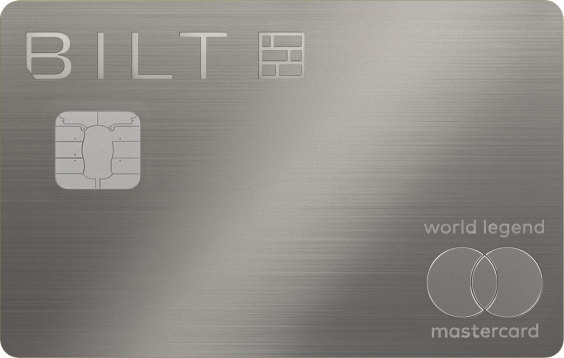
With the Bilt Palladium, you’ll earn 50,000 Bilt points after you spend $4,000 on purchases (excluding rent or mortgage) in your first three months, along with Gold status in the Bilt Rewards program. Using the same value, assuming a worth of 1 cent per point, that’s worth at least $500, and again, potentially much more.
Bilt Gold status gets you higher transfer bonuses on Rent Day (the first of each month) as the biggest perk, along with other unquantifiable benefits like special access, concierge and discounts. How much you value this status is up to you, but at a glance, it’s not anything that will help you much outside of the “Bilt ecosystem.” You’ll also get $300 of Bilt Cash as part of the welcome offer, which you can use to earn points on your rent or mortgage payment or offers through Bilt’s expansive set of partners.
CardCritics™ Opinion
There’s no question that Chase Sapphire Reserve has the better bonus in terms of value. And while the Bilt Palladium doesn’t require as much spending to earn a welcome bonus, it will certainly require you to spend with it to earn points on your housing payment (or use your Bilt Cash — more on that soon).
Earning Rewards
The Chase Sapphire Reserve is set up in a way that points you to the bank’s travel portal to earn and redeem the most rewards. The Bilt Palladium also has a travel portal, but with set earn rates for your booking. As travel-focused cards, you’ll find very different ways of earning on each card.
How To Earn Rewards With Chase Sapphire Reserve
With the Sapphire Reserve, you’ll earn:
- 8x Ultimate Rewards points on all purchases through Chase Travel℠
- 4x Ultimate Rewards points on flights and hotels booked directly
- 3x Ultimate Rewards points on dining
- 1x Ultimate Rewards point on all other purchases
The lion’s share of points are earned when you book travel through Chase. You can also earn a decent amount by booking your flights and hotels directly with the airline or hotel chain, but notably missing are all other types of travel, such as trains, subways, cruises and more. Earning 3x points on dining isn’t spectacular for a card of this caliber, and the 1x base earn rate is low — so you’ll need to really like the bonus categories to earn points for ongoing spending.
How To Earn Rewards With Bilt Palladium
Earning rewards with the Bilt Palladium is simple. You’ll earn 2x Bilt points on all non-housing purchases.
You also need to choose between earning Bilt Cash or a points multiplier for your housing payment. If you choose the Bilt Cash option, you’ll earn 4% Bilt Cash for spending on the Bilt Palladium, and you can redeem $30 in Bilt Cash to earn 1x points per $1,000 of your housing payment. You can also redeem your Bilt Cash for services and merchandise with Bilt and its partners.
If you don’t select Bilt Cash, but instead opt to earn points through purchase ratios (the “housing-only” option), your housing payment multiplier is determined by how much you spend on the card in a billing cycle:
- Spend 25% but less than 50% of your housing payment, get 0.5x points
- Spend 50% but less than 75% of your housing payment, get 0.75x points
- Spend 75% but less than 100% of your housing payment, get 1x points
- Spend 100% or more of your housing payment, get 1.25x points
If you spend less than 25% of your housing payment, you’ll still get 250 points if you pay it through Bilt.
CardCritics™ Opinion
I don’t like being locked into an issuer’s travel portal to earn points. I’d rather book everything directly for several reasons, such as being able to rebook with the airline if needed and earning hotel loyalty points on my stay. You won’t get either of these things when you book through a third-party provider like a bank travel portal.
That said, if you don’t mind booking this way, the Chase Sapphire Reserve is the better choice. I would rather earn 2x points on every purchase, so I’d choose the Bilt Palladium. Your preference may be different. Having no bonus categories to remember is the simplest part of this card.
Redeeming Rewards
The Chase Sapphire Reserve and Bilt Palladium Card earn flexible, transferable rewards that you can use for travel (and other options that typically offer lower value).
How To Redeem Rewards With Chase Sapphire Reserve
With the Sapphire Reserve, you’ll earn Chase Ultimate Rewards points that you can redeem in several ways:
- Chase Travel: You can book travel like flights, hotel stays, cruises, rental cars and more, sometimes with a Points Boost on select options (1 to 2 cents per point)
- Cash back: It’s possible to redeem points for a statement credit or direct deposit, though it’s not the most valuable option (1 cent per point)
- Transfer to airline and hotel partners: This is by far the best way to redeem points for transfers to Chase’s travel partners, including United MileagePlus, Southwest Rapid Rewards and World of Hyatt (value varies)
- Shop with points: You can use points to pay for purchases with certain retailers, like Amazon, Apple and PayPal, but it’s usually not a good deal (rate varies, but typically 0.8 cents each)
- Gift cards: Chase allows you to purchase gift cards using your points, but again, it’s not the best value (around 1 cent per point)
- The Shops at Chase: This is Chase’s digital storefront with curated merchandise (1 cent per point)
How To Redeem Rewards With Bilt Palladium
Likewise, Bilt offers several reward options with varying values. You can redeem Bilt points for:
- Travel through Bilt: Bilt has a travel portal where you can book flights, hotels or Blade helicopter transfers (1.25 cents per point)
- Rent payments: You can redeem Bilt points toward a rent payment (0.55 cents per point)
- Fitness classes: Redeem for various fitness classes, like training, yoga and more (1 cent per point)
- Everyday purchases: You can redeem Bilt points for home delivery services, mobile dining, Lyft rides and Amazon purchases (value varies)
- Gift cards: You can get gift cards to popular merchants like Foot Locker, Home Depot, Starbucks and West Elm (around 0.7 cents per point)
- Transfer to Bilt’s airline and hotel partners: Partners include Air Canada Aeroplan, Alaska Airlines Atmos Rewards, British Airways Club and Southwest Rapid Rewards for airlines and IHG One Rewards, Hilton Honors and World of Hyatt for hotels (value varies)
CardCritics™ Opinion
If you’re looking to transfer points to travel partners, Bilt objectively has the best in the industry. While Chase is no slouch, Bilt’s is just all-around better (though there’s plenty of overlap). If you want to redeem your points for statement credits or travel, the Sapphire Reserve is a better choice due to higher value and a potential Points Boost.
Card Benefits
Both cards are loaded with benefits, as you might expect from cards with annual fees in the hundreds.
Chase Sapphire Reserve Benefits
Chase Sapphire Reserve benefits can provide over $2,700 in annual value, but you’ll have to put in significant effort to make the most of the long list of benefits:
- $300 annual travel credit each account anniversary year
- $500 credit for stays with The Edit, awarded as up to $250 in statement credits from January through June and July through December for prepaid bookings made with The Edit, with a two-night minimum required
- $300 dining credit, awarded as up to $150 in statement credits from January through June and from July through December for a maximum of $300 annually at restaurants that are part of Sapphire Reserve Exclusive Tables
- DoorDash DashPass membership when you activate by Dec. 31, 2027
- $300 in annual DoorDash promos, up to $25 each month, including a $5 monthly promo to spend on restaurant orders and two $10 promos each month to save on groceries, retail orders, and more through Dec. 31, 2027
- $300 StubHub credit, awarded as up to $150 in statement credits from January through June and from July through December for a maximum of $300 annually for StubHub and Viagogo purchases through Dec. 31, 2027 when you enroll
- $250 Apple TV+ annual subscription credit through June 22, 2027
- $120 in annual Lyft credits, awarded as up to $10 in monthly in-app credits — and 5x total points on Lyft rides through Sept. 30, 2027
- Up to $120 in statement credits for Global Entry, TSA PreCheck or NEXUS, available once every four years after the first program application fee is charged to your card
- Airport lounge access via the Chase Sapphire Lounge by The Club network, with two complimentary guests
- Priority Pass Select membership, with complimentary access for the primary cardmember and up to two accompanying guests
- Access to select Air Canada Maple Leaf Lounges and Air Canada Cafés in the U.S., Canada and Europe with an eligible boarding pass
- $120 in annual credits for eligible Peloton memberships, awarded as $10 in statement credits per month through Dec. 31, 2027, with activation required, and 10x total points on eligible Peloton equipment and accessory purchases over $150 through the same date
- Primary auto rental coverage
- Trip cancellation and interruption insurance
- Trip and baggage delay reimbursement
- Lost luggage reimbursement
In addition, when you spend $75,000 or more on the card in a calendar year, you’ll receive:
- IHG One Rewards Diamond elite status
- A $250 credit for The Shops at Chase
- $500 Southwest Airlines Chase travel credit and A-List elite status
That’s a lot of benefits. But remember, they’re only worthwhile if you can actually use them. Nearly everyone should be able to use the $300 annual travel credit, which is broad and automatic.
Bilt Palladium Benefits
Here’s what comes with the Bilt Palladium Card:
- Bilt Travel hotel credit: You’ll get $400 per year, broken into two $200 credits, for qualifying Bilt Travel hotel bookings of two nights or more
- Priority Pass lounge membership: Get access to over 1,200 Priority Pass lounges for you and two guests.
- Trip delay insurance: If your trip is delayed more than six hours, you can get up to $300 per trip once per 12-month period toward essentials
- Trip cancellation and interruption protection: You can get your trip refunded for a covered reason, up to $2,000 per covered trip and $5,000 per account per 12-month period
- Lost or damaged luggage coverage: If something happens to your bag, or it’s lost, you can get up to $1,500 per incident up to the actual cost, twice per 12-month period
- Baggage delay: Get up to $250 per claim with two claims per 12-month period
- Extended warranty: Eligible items purchased with the card get an additional two years of warranty coverage
- Cell phone protection: If your phone is stolen or damaged, and you pay your wireless bill with the card, you can get up to $800 per claim and $1,000 per card with a $50 deductible up to two times per 12-month period
- No foreign transaction fees: You won’t pay them with the Bilt Palladium card
- Car rental insurance: Pay for your rental with the card and decline the rental agency’s collision insurance, and get secondary coverage for theft or collision
- Price drop protection: You’re covered for 90 days if something you buy has a lower price, up to $250, with a $25 deductible
CardCritics™ Opinion
If you can take advantage of the benefits of the Chase Sapphire Reserve card, that lineup is hard to beat. Of course, the annual fees are in proportion to the extra goodies that are offered, and you can also do well with Bilt Palladium’s comparatively smaller list.
Fees and Costs
Both cards have high annual fees and fees for each authorized user, but only one qualifies as an introductory APR offer.
Chase Sapphire Reserve Fees and Costs
- Annual fee: $795
- Authorized user fee: $195 per year
- APR: 19.49% - 27.99% Variable
- Balance transfer fee: $5 or 5% of the amount of each transfer, whichever is greater
- Cash advance fee: $10 or 5% of the amount of each transaction, whichever is greater
- Foreign transaction fee: None
- Late payment: Up to $40
- Returned payment: Up to $40
Bilt Palladium Fees and Costs
- Annual fee: $495
- Authorized user fee: $95 per user
- APR: 10.00% Introductory APR applies to each New Card Purchase that posts to your account during the first 12 billing cycles after the date you open your account. After that, A 26.74% to 34.74% Variable APR applies to purchases. A 26.74% to 34.74% Variable APR applies to Balance Transfers, based on your creditworthiness.
- Balance transfer fee: Either $5 or 5% of the amount of each balance transfer, whichever is greater
- Cash advance fee: Either $5 or 5% of the amount of each cash advance, whichever is greater
- Foreign transaction fee: None
- Late payment fee: Up to $41
- Returned payment fee: Up to $41
CardCritics™ Opinion
The Bilt Palladium has the better APR the first year, assuming you’re carrying a balance (which you shouldn’t). But the regular APR is much higher than the Sapphire Reserve’s. Both cards have a fee for authorized users, which isn’t surprising. The other fees are pretty standard for credit cards.
How To Choose Between Chase Sapphire Reserve and Bilt Palladium
Here’s who can do better with the Chase Sapphire Reserve:
- City dwellers who can use the statement credits
- Those who book a lot of travel (particularly flights and hotels)
- Travelers who don’t mind using a bank booking portal
- Ultimate Rewards fans
- Flyers who want airport lounge access
- Travelers who want industry-best travel protections
- Big spenders who can unlock the bonus features through card spend
And these types of people will likely find the Bilt Palladium Card the better option:
- Renters or homeowners who want to maximize their housing payment
- Property owners who have multiple rent or mortgage payments to make
- Bilt fans who prefer the set of travel transfer partners
- Spenders who can spend enough to earn enough points or Bilt Cash with spending on the card
- Flyers who are content with Priority Pass airport lounges
- Those who prefer flat rewards and no bonus categories to remember
There are use cases for other niches as well. Most benefits are “use it or lose it,” so I’d encourage you to plan how to make the most of them before you apply and to review the list of benefits as part of your decision.
The information related to the Chase Sapphire Reserve® and Bilt Palladium Card was collected by CardCritics™ and has not been reviewed or provided by the issuer of this product/card. Product details may vary. Please see issuer website for current information. CardCritics™ does not receive a commission for this product.
Frequently Asked Questions About the Chase Sapphire Reserve vs Bilt Palladium
Is there a better card than the Chase Sapphire Reserve?
The credit card industry is rife with all sorts of cards to fit every style of spending, desired benefits and reward preference, so the “best” card for one person may not be the best card for you. In particular, the Chase Sapphire Reserve may be the best fit if you’re a frequent traveler and big spender who lives in an urban environment (or travels to one) to maximize the many benefits and statement credits.
Who is Chase Sapphire Reserve’s biggest competitor?
That would be the American Express Platinum Card® (an advertising partner) — the original “coupon book” credit card and, for a long time, the card with one of the highest annual fees. Many issuers are marketing their own version these days, complete with statement credits, elite status opportunities and bonus points for booking travel through the proprietary issuer portal, so now Chase has plenty of competition in this arena.
Is the Chase Sapphire Reserve no longer worth it?
If the high annual fee gives you heartburn or you feel you can’t fully maximize the benefits, you would be better served by another credit card, and the Chase Sapphire Reserve would not be worth it for you.
Is Bilt Palladium worth it?
The Bilt Palladium is only worth it for those who want a high-contact credit card with many decisions and spending opportunities, but it also carries an annual fee of $495.
What are the downsides of the Bilt card?
The biggest cons are a convoluted earning system, low everyday rewards and a weak welcome offer for a card with a high annual fee. Everything else is what you make of it.