How To Maximize the Chase Sapphire Preferred Welcome Bonus
-
 Written by
Adam Frankel
Written by
Adam Frankel
-
 Edited by
Jasmin Baron, CCC™
Edited by
Jasmin Baron, CCC™

When it comes to travel rewards credit cards, the Chase Sapphire Preferred® Card is best-in-class. For an annual fee of just $95, the card’s welcome bonus is one of the most valuable you’ll find, offering a strong combination of flexibility and high redemption potential. With the right strategy, that bonus alone can unlock hundreds — sometimes thousands — of dollars’ worth of travel.
This guide breaks down exactly how to maximize the Chase Sapphire Preferred Card’s welcome bonus, from earning it efficiently to redeeming it for maximum value.

400+ Credit Cards
Analyzed independently across 50+ data points in 30+ product categories

Reviewed
By a team of credit card experts with an average of 9+ years of experience

Trusted by
More than one million monthly readers seeking unbiased credit card guidance
CardCritics™ editorial team is dedicated to providing unbiased credit card reviews, advice and comprehensive comparisons. Our team of credit card experts uses rigorous data-driven methodologies to evaluate every card feature, fee structure and rewards program. In most instances, our experts are longtime members or holders of the very programs and cards they review, so they have firsthand experience maximizing them. We maintain complete editorial independence — our ratings and recommendations are never influenced by advertiser relationships or affiliate partnerships. You can learn more about our editorial standards, transparent review process and how we make money to understand how we help you make informed financial decisions.
What Is the Chase Sapphire Preferred Welcome Bonus?
The Chase Sapphire Preferred welcome bonus is an incentive that rewards new cardholders with a large number of Chase Ultimate Rewards® points after meeting a minimum spending requirement.
Typical Welcome Bonus Structure
Most offers follow a simple format:
- Spending a required amount on purchases with the card within a specific timeframe after opening the account (typically three months)
- Once you meet that spending threshold, you receive a set number of Ultimate Rewards points
For example, the current offer for the Chase Sapphire Preferred Card is 75,000 points after spending $5,000 on purchases in the first three months of account opening.
Offers can vary depending on timing, targeted promotions, or whether you apply through a referral link.
Minimum Spend Requirement and Timeframe
The spending window is usually three months from the date you open the account (not when you receive the card). That means planning is essential, as applying without a strategy can make it harder to hit the requirement naturally.
Why the Chase Sapphire Preferred Bonus Is So Valuable
The real magic of the Chase Sapphire Preferred Card bonus isn’t just the number of points — it’s what those points can do. Whether you’re booking your first award flight or optimizing a multi-card strategy, the key is understanding how to earn and redeem your points strategically. Done right, the card’s single bonus can fund a memorable trip — and set the stage for years of high-value rewards.
How Much Chase Ultimate Rewards Points Are Worth
Chase Ultimate Rewards points are widely considered among the most valuable points currencies because, with the Sapphire Preferred Card, they offer:
- Baseline value: 1 cent per point for cash back or bookings through Chase Travel℠ (up to 1.75 cents using Chase’s Points Boost feature)
- Higher potential value: Up to 2 cents per point (or more) when transferred to Chase’s airline frequent flyer program and hotel loyalty program partners
That means a 75,000-point bonus could be worth:
- $750 in cash back as a statement credit
- Up to $1,312 in travel through Chase Travel
Keep in mind that not every travel redemption will maximize your rewards, but using your points to book travel is often more valuable than redeeming them for straight cash back.
Best Ways To Redeem the Welcome Bonus
The Chase Sapphire Preferred Card welcome bonus remains one of the best entry points into travel rewards. With thoughtful planning, you can not only earn the bonus easily but also stretch its value far beyond its face amount.
Here are some top redemption strategies:
Transferring Points to Airline Partners
Chase transfer partners such as United MileagePlus, Southwest Rapid Rewards and Air Canada Aeroplan can potentially offer better value for flights and help you stretch your bonus.
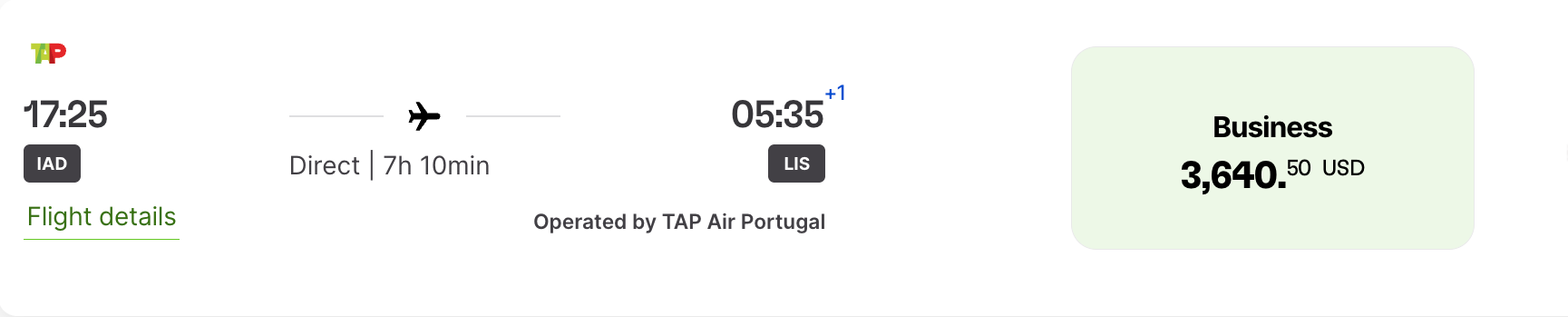
For example, the one-way cash price for a sample business-class flight on TAP Air Portugal from Washington Dulles (IAD) to Lisbon (LIS) is $3,640.50.
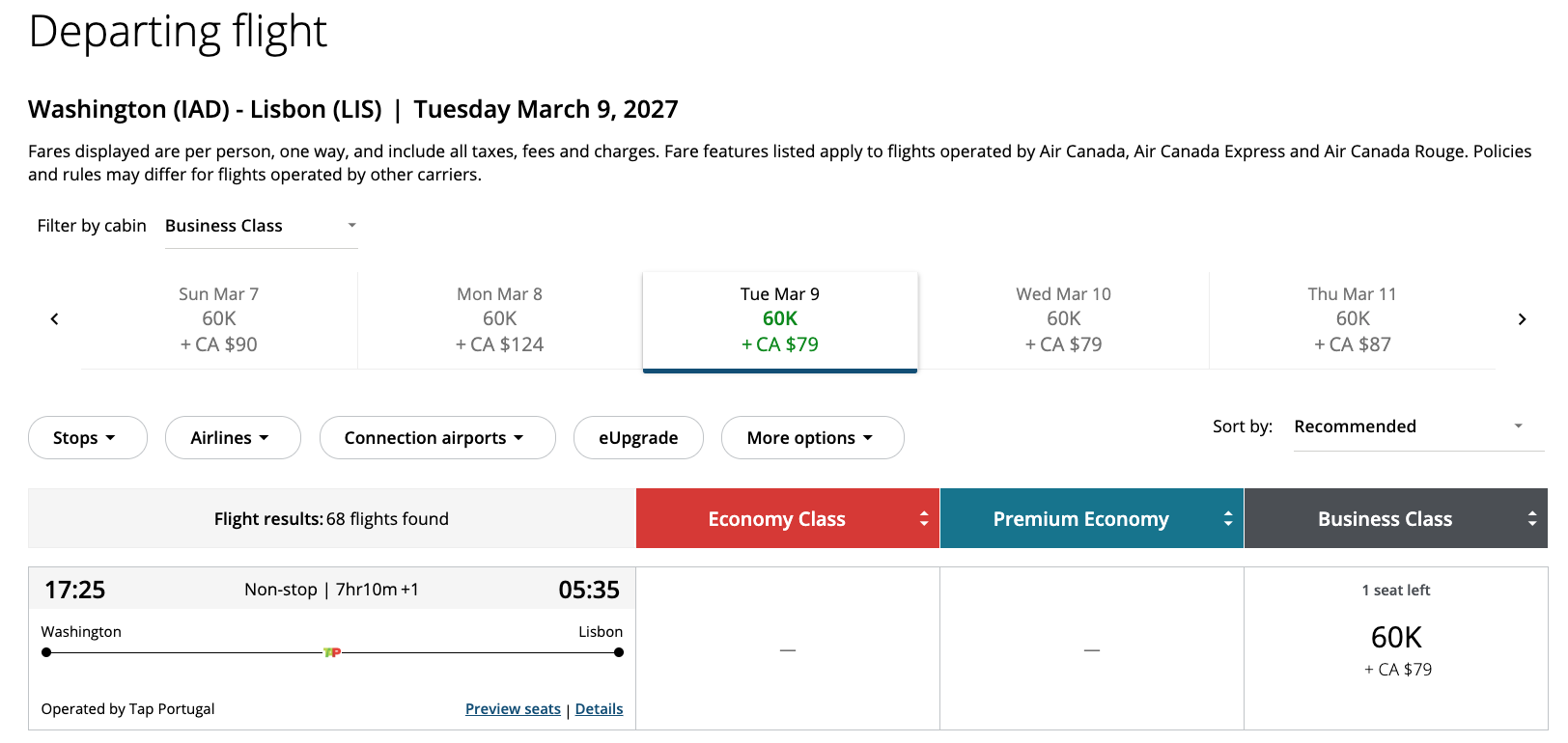
If you transfer your Chase Ultimate Rewards points to Air Canada Aeroplan, the flight will cost you 60,000 Aeroplan points plus 79 Canadian dollars (about $58) in taxes and fees.
By transferring Chase points to Aeroplan to book this award flight, you’ll receive a value of nearly 6 cents per point ($3,640.50 cash fare minus $58 in taxes and fees, divided by 60,000 points).
Booking that same flight through Chase Travel isn’t a good idea — it’s the same cash price of $3,640.50, but you’d need to spend a whopping 364,050 Chase points at 1 cent per point to cover the cost.
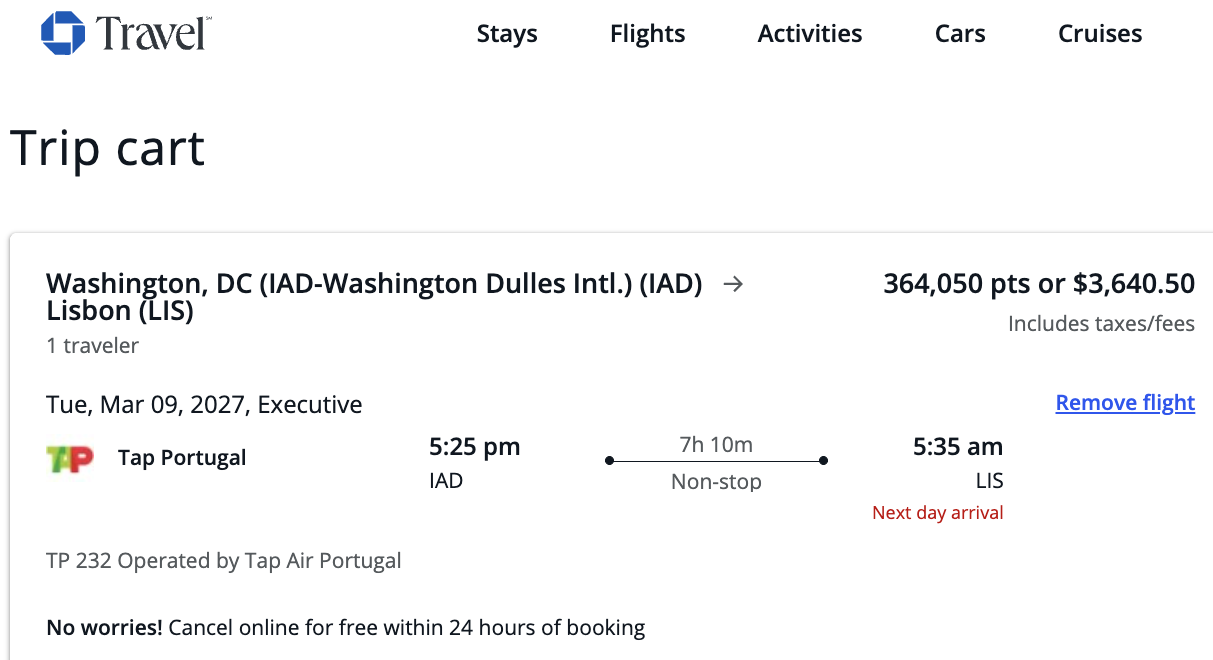
This is a prime example of when transferring points to partners makes more sense than booking through the bank’s travel portal.
Transferring Points to Hotel Partners
Some of Chase’s hotel partners, such as World of Hyatt, can provide strong value for hotel stays. That said, the issuer recently devalued the transfer ratio for Sapphire Preferred Card members. Previously, it was 1:1, but now it’s 4:3 (4 Chase points convert to 3 Hyatt points). This can still be a good deal, depending on the redemption.
For example, if you fancy a trip to Mexico, the all-inclusive, adults-only Hyatt Zilara Riviera Maya has rooms starting at $351 per night in mid-October.
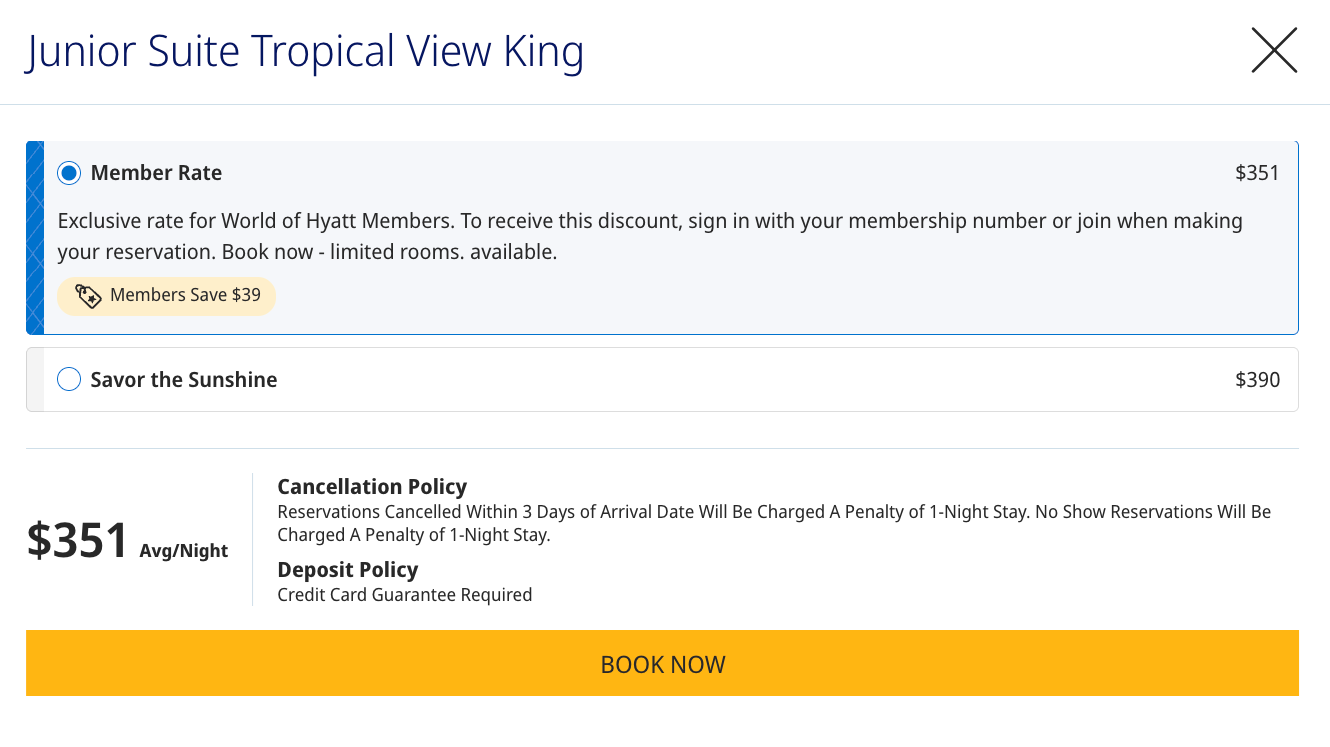
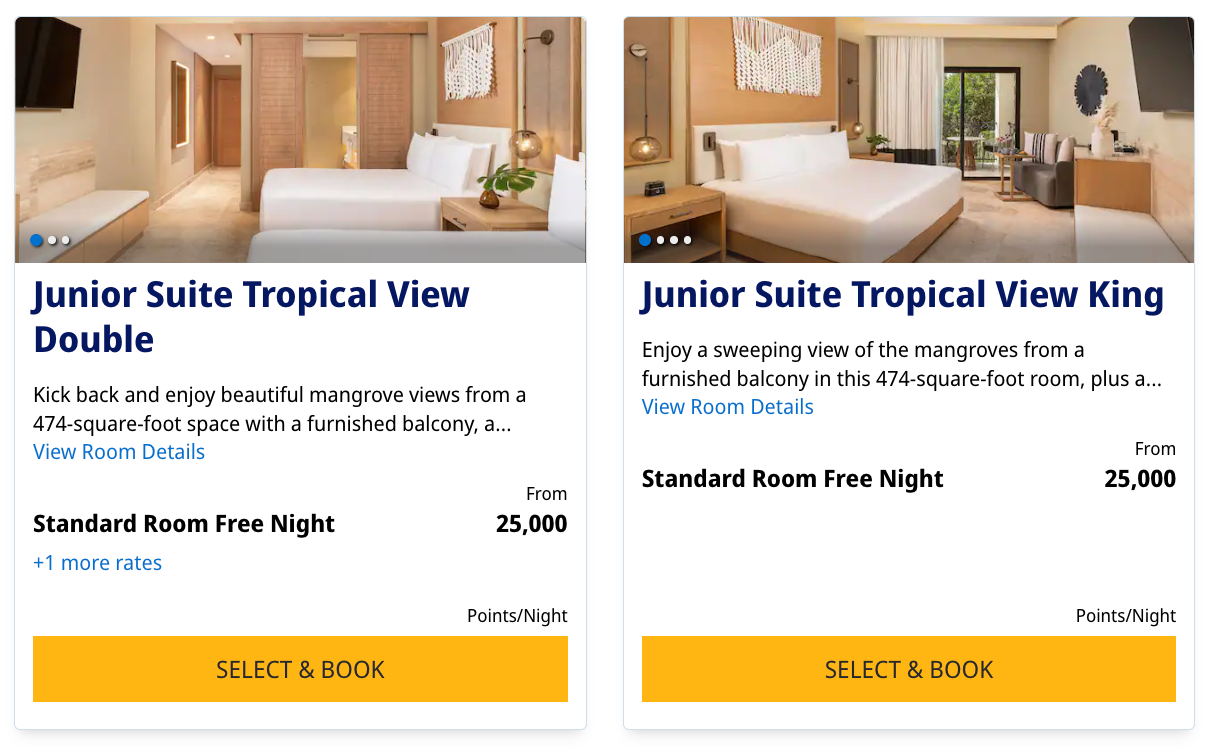
That same room will cost you just 25,000 Hyatt points per night. Since Chase points transfer to Hyatt at a 4:3 ratio from the Sapphire Preferred, you’d need to move 34,000 Chase points to World of Hyatt to book this stay (points transfers must be in 1,000-point increments). That’s still a solid points value for a vacation with all meals included.
This is a better deal than booking through Chase Travel at 1 cent per point — the same room booked through that platform would set you back 39,113 Ultimate Rewards points.
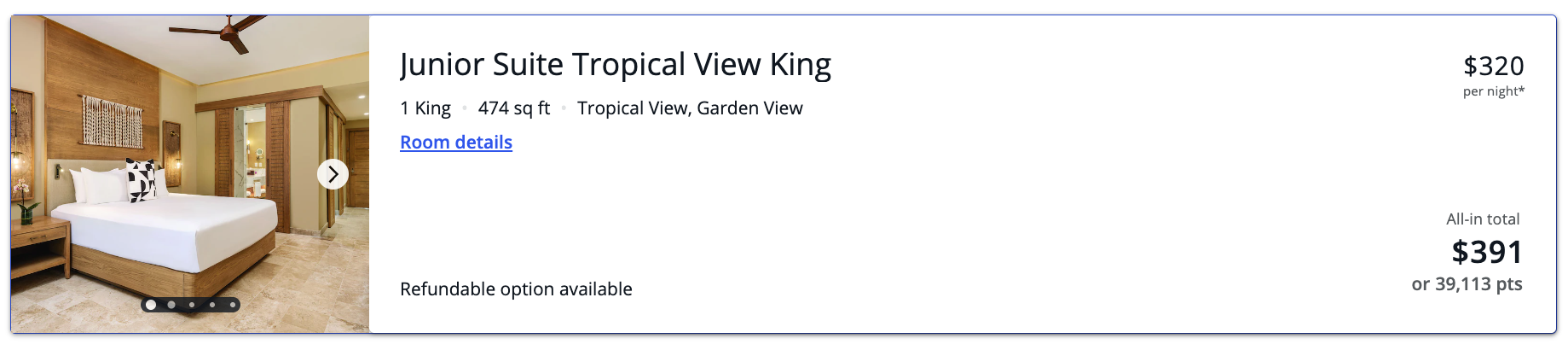
Again, these examples highlight why Ultimate Rewards points offer flexibility and value — and also emphasize the importance of comparing redemption methods.
Booking Travel Through Chase Travel
Redeeming points through Chase Travel is simple and convenient, but as the previous examples show, it’s not always the best deal. That said, the platform offers Sapphire Preferred cardholders a better value on some bookings through the built-in Points Boost feature. Select hotels and flights offer redemption rates of more than 1 cent per point, making them among the easiest ways to extract strong value without needing advanced travel knowledge.
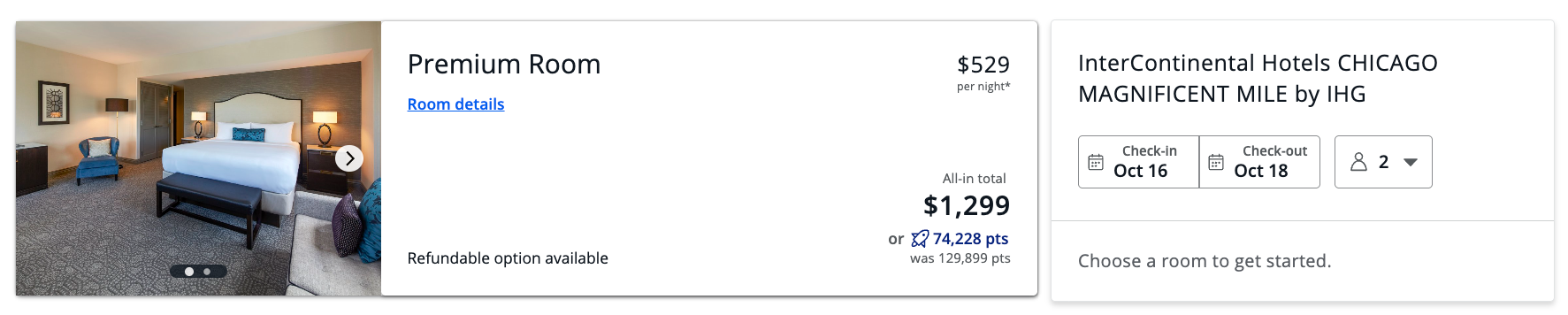
For example, the cash price of a two-night stay in October at the luxurious InterContinental Magnificent Mile in Chicago is $1,299 booked through Chase Travel. Because this hotel is eligible for a Points Boost promotion, you’d pay just 74,228 Chase points for the entire stay — a value of 1.75 cents per point.
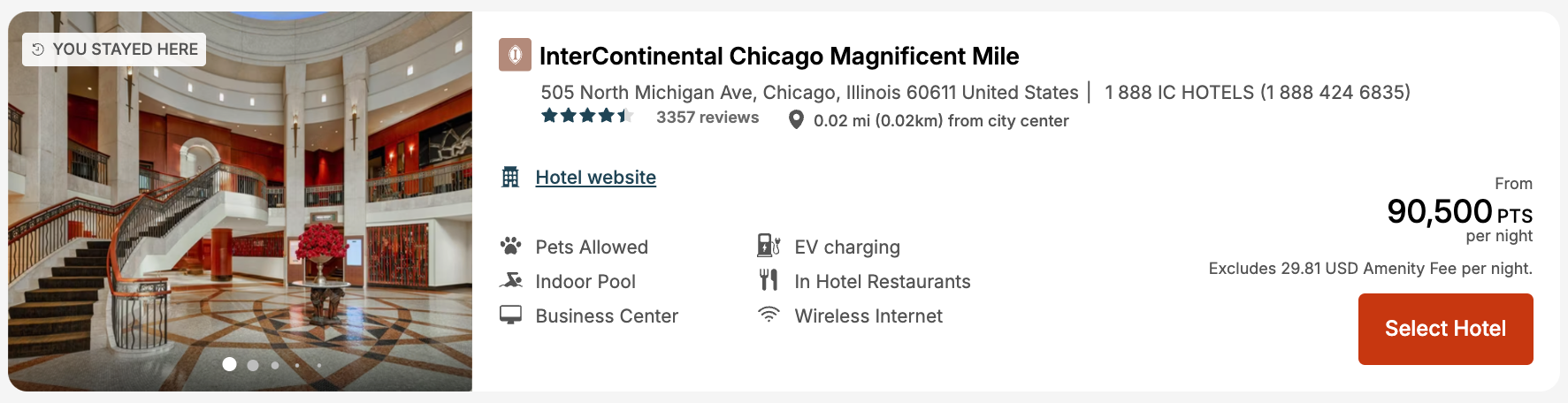
If you booked the exact same room and dates using IHG One Rewards points, it would cost 90,500 points per night, totaling 181,000 points for the stay. This is a case where transferring Chase Ultimate Rewards points to IHG isn’t a good choice.
You may have to be flexible with dates and properties to take advantage of Points Boost, but if you find a hotel that fits your travel plans, you can save a ton of points.
How To Earn the Chase Sapphire Preferred Bonus Efficiently
Meeting the minimum spending requirement to unlock the Chase Sapphire Preferred Card bonus doesn’t require overspending, but it does require some planning.
Smart Spending Strategies
Time Your Application Strategically
Applying for the card before large planned expenses like vacation bookings, insurance payments, home repairs or tuition can make it easy to reach the minimum spending threshold quickly.
Use Everyday Spending
Put all of your regular expenses on your card, such as groceries, dining, gas and streaming services. Even small purchases like a cup of coffee or a pack of gum add up.
Prepay or Front-Load Expenses
If possible, you can consider paying for goods or services in advance. For example, you could pay annual subscriptions upfront, buy gift cards for stores you already use or pay your quarterly tax bill (albeit with a small fee).
Pay Household Bills With Your Card
Be sure to pay your phone bill, cable and internet bills with your new Sapphire Preferred Card — most services readily accept credit cards as payment. You may also be able to pay for utilities such as electricity, natural gas and water/sewer, depending on your provider. You could also consider services that allow you to pay rent with a credit card for a fee.
What Purchases Count Toward the Bonus
Most everyday spending will count toward the minimum spending requirement for the bonus, including expenses like travel, dining and online shopping.
Be careful, because certain transactions are excluded: Cash advances, balance transfers, and fees and interest charges don’t count.
Pairing the Chase Sapphire Preferred With Other Chase Cards
One of the biggest advantages of Chase is its ecosystem. The best Chase credit cards allow you to pool your Ultimate Rewards with other eligible Ultimate Rewards-earning cards to maximize the earnings with every dollar you spend.
Example Pairing: Sapphire Preferred + Chase Freedom Unlimited
The no-annual-fee Chase Freedom Unlimited® earns cash back, but it’s awarded as Ultimate Rewards points where 1 point = 1 cent:
- 5% cash back (5x points) on travel booked through Chase Travel
- 3% cash back (3x points) on dining
- 3% cash back (3x points) at drugstores
- 1.5% cash back (1.5x points) on all other spending
By pairing the Sapphire Preferred Card with the Freedom Unlimited, you’ll access 3x points at drugstores and a higher 1.5x base rewards rate on non-bonus categories. You can transfer the points earned with the Freedom Unlimited to the Sapphire Preferred and unlock higher-value redemptions, such as transfers to partner programs. This effectively turns the cash-back Freedom Unlimited Card into a travel rewards powerhouse.
Example Pairing: Sapphire Preferred + Chase Freedom Flex
Also with no annual fee, the Chase Freedom Flex® pairs nicely with the Sapphire Preferred Card. The Freedom Flex earns:
- 5% cash back (5x points) on travel booked through Chase Travel
- 5% cash back (5x points) in quarterly rotating bonus categories on up to $1,500 in combined spending per quarter (then 1%) after activation
- 3% cash back (3x points) on dining
- 3% cash back (3x points) at drugstores
- 1% cash back (1x points) on all other spending
The Freedom Flex requires a bit more attention, since you have to activate and track the 5x categories — but the boost it can provide to your rewards balance is significant.
Common Mistakes That Can Cost You the Bonus
Even experienced users sometimes slip up. Avoid these pitfalls:
Not Understanding Chase’s Eligibility Rules
Chase has strict rules for welcome bonuses, including the 5/24 rule (more below) and restrictions within the Sapphire card family. Ignoring these can result in denial or ineligibility.
Missing the Minimum Spend Deadline
This is one of the most common (and costly) mistakes — if it’s going to be a stretch to spend $5,000 on purchases in three months, you’ll want to track your spending weekly and set reminders well in advance of the three-month mark. Keep in mind the clock starts ticking the day you open the card, not when it arrives in the mail, or when you first use it.
Also, allow time for transactions to post — not just be made — if you’re cutting it close to the deadline. Be sure to account for returns; those purchases will be deducted from your progress toward the minimum spend threshold.
Chase Sapphire Preferred Eligibility Rules Explained
Understanding if you qualify is critical before applying, and Chase has several eligibility criteria for this card.
Chase 5/24 Rule
Chase won’t approve you for most of its cards if you’ve opened five or more credit cards (from any issuer in the past 24 months. That includes most personal credit cards, authorized user accounts (sometimes) and some small-business cards.
If you’re at or above 5/24, you’ll want to wait to apply for the Chase Sapphire Preferred Card.
Sapphire Bonus Once In A Lifetime Rule
You can only earn a Sapphire card bonus once. This means if you’ve received a welcome bonus on a Chase Sapphire Preferred Card before, you likely aren’t eligible to get one again, even if you haven’t had the card in several years.
Is the Chase Sapphire Preferred Welcome Bonus Worth It?
For many users, the Chase Sapphire Preferred is worth it, but it depends on your goals.
When the Bonus Offers Great Value
- You have moderate spending and can meet the requirement naturally
- You want flexible travel rewards
- You’re new to points and miles
This card is especially appealing for beginners because it balances ease of use with a strong upside.
When Another Chase Card Might Be a Better Fit
- Frequent travelers may prefer a premium card with more perks
- Cash-back users may want a no-annual-fee option
- Those who don’t travel often may not maximize the value
Frequently Asked Questions About the Chase Sapphire Preferred Welcome Bonus
How long do I have to earn the Chase Sapphire Preferred bonus?
You have three months from the date of account opening to meet the minimum spending requirement on the Chase Sapphire Preferred Card. This means the day you opened the account, not the day you receive your physical card.
What happens if I don’t meet the minimum spend on the Sapphire Preferred?
If you don’t meet the minimum spending requirement on the Chase Sapphire Preferred Card, you won’t earn the welcome bonus, even if you’re close — so planning is critical.
Can I get the Sapphire Preferred welcome bonus more than once?
According to Chase’s terms and conditions, you may only earn the Sapphire Preferred bonus once.
Do returns count against my spending requirement?
Yes, if you return a purchase, that amount is deducted from your progress toward meeting the minimum spending requirement to earn the bonus.
What’s the best way to redeem the Chase Sapphire Preferred bonus?
The best way to redeem the Chase Sapphire Preferred Card bonus highly depends on your goals. If you prefer simplicity, Chase Travel is easy to use and offers access to a wide range of airline and hotel options. However, if your aim is to get maximum value from your rewards, transferring points to Chase’s airline and hotel partners is often a better approach.